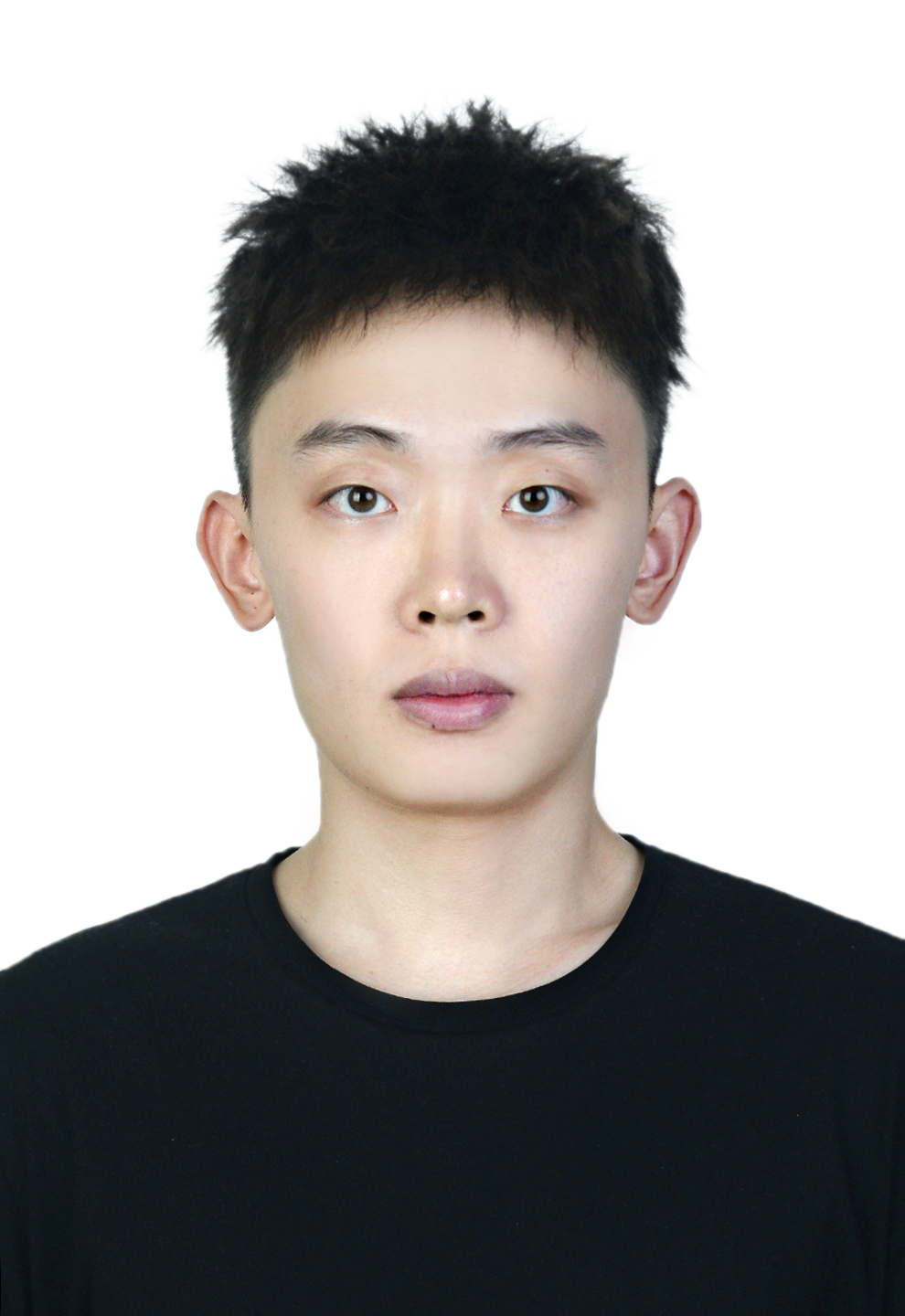
| Murong Ma | Code Agents, Data Curation, and XAI |
About Me
I am a Computer Science Ph.D. student at the National University of Singapore, supervised by Prof. Jin Song Dong and Prof. Yun Lin. I develop data and post-training methods for reliable code agents and am currently a research intern at Microsoft Research Asia (MSRA).
My work spans supervised fine-tuning trajectory construction and curation, reinforcement learning for software-engineering agents, and data-centric methods for accurate and trustworthy AI. I am currently open to research and industry opportunities.
Research Interests
- Code Agent Post-Training: constructing and curating high-quality supervised fine-tuning trajectories and developing reinforcement-learning methods for code agents.
- Data Curation: selecting, refining, and evaluating training data and agent trajectories to improve model capability and reliability.
- Explainable AI (XAI): developing actionable explanations that help people understand model behavior and make informed decisions.
Education
National University of Singapore
National University of Singapore · Artificial Intelligence specialization
Beijing University of Posts and Telecommunications
Experience
Research Intern
Working with Dr. Yeyun Gong on code-agent post-training across three workstreams:
- Repository-level mid-training — collaborator: a large-scale mid-training pipeline that curates verified pull requests as training signals for repository-level code editing, detailed in our ICML 2026 paper.
- Process-supervised SFT trajectories — lead: led the trajectory-construction and curation work for P2T, using golden patches as privileged process supervision to recover effective, efficient agent trajectories; improved Pass@1 on SWE-bench Verified by up to 10.8 points while reducing per-instance inference cost by approximately 15%.
- Long-horizon code-agent RL — lead: leading an ongoing project that addresses sparse terminal rewards and low rollout success through two complementary techniques: an evidence-driven process reward model (PRM) that extracts and verifies task-relevant evidence from intermediate trajectories to provide process-level rewards, and a P2T-to-RL extension that bootstraps valid training trajectories for difficult instances where successful single-pass rollouts remain rare even under repeated sampling.
Evaluation scope: SWE-bench, NL2Repo, and other benchmarks requiring long-horizon repository reasoning and complex code generation.
ShowLab · National University of Singapore
Research Assistant
- Completed the M.S. thesis Subject-Adaptive Speech-Driven 3D Facial Animation, focusing on 3D avatar generation and speech-driven animation.
- Built a high-resolution face video dataset—a 4K variant of VoxCeleb—for face generation, talking-head synthesis, and cross-modal research.
- Helped organize the Ego4D Challenge 2022 as a point of contact for the Talking to Me Challenge.
SMIIP Lab · Data Science Research Center · Duke Kunshan University
Research Intern
- Conducted research in speech recognition, bilingual query-by-example spoken-term detection, keyword spotting, and multimodal speech-driven facial animation.
- Helped organize the 2020 Personalized Voice Trigger Challenge; the team placed second in the Interspeech 2021 Auto-KWS Challenge.
Publications
Recent and Selected
From Patches to Trajectories: Privileged Process Supervision for Software-Engineering Agents
Murong Ma, Tianyu Chen, Yun Lin, Shuai Lu, Qinglin Zhu, Yeyun Gong, Zhiyong Huang, Peng Cheng, Yan Lu, and Jin Song Dong. arXiv preprint arXiv:2605.21996, 2026.Pull Requests as a Training Signal for Repo-Level Code Editing
Qinglin Zhu, Tianyu Chen, Shuai Lu, Lei Ji, Runcong Zhao, Murong Ma, Xiangxiang Dai, Yulan He, Lin Gui, Peng Cheng, and Yeyun Gong. In International Conference on Machine Learning (ICML), 2026.TrainRef: Curating Data with Label Distribution and Minimal Reference for Accurate Prediction and Reliable Confidence
Murong Ma, Ruofan Liu, Yun Lin, Zhiyong Huang, and Jin Song Dong. In The Fourteenth International Conference on Learning Representations (ICLR), 2026.Few-Shot Precise Event Spotting via Unified Multi-Entity Graph and Distillation
Zhaoyu Liu, Kan Jiang, Murong Ma, Zhe Hou, Yun Lin, and Jin Song Dong. Proceedings of the AAAI Conference on Artificial Intelligence, 40(9):7422–7430, 2026.F3Set: Towards Analyzing Fast, Frequent, and Fine-grained Events from Videos
Zhaoyu Liu, Kan Jiang, Murong Ma, Zhe Hou, Yun Lin, and Jin Song Dong. In International Conference on Learning Representations (ICLR), pp. 10566–10580, 2025.Revisiting the Conflict-Resolving Problem from a Semantic Perspective
Jinhao Dong, Jun Sun, Yun Lin, Yedi Zhang, Murong Ma, Jin Song Dong, and Dan Hao. In Proceedings of the 39th IEEE/ACM International Conference on Automated Software Engineering (ASE), pp. 141–152, 2024.
Earlier Work
Novel View Synthesis for High-fidelity Headshot Scenes
Satoshi Tsutsui, Weijia Mao, Sijing Lin, Yunyi Zhu, Murong Ma, and Mike Zheng Shou. arXiv preprint arXiv:2205.15595, 2022.Acoustic Word Embedding System for Code-Switching Query-by-Example Spoken Term Detection
Murong Ma, Haiwei Wu, Xuyang Wang, Lin Yang, Junjie Wang, and Ming Li. In 2021 12th International Symposium on Chinese Spoken Language Processing (ISCSLP), pp. 1–5, 2021.The DKU System Description for the Interspeech 2021 Auto-KWS Challenge
Yechen Wang, Yan Jia, Murong Ma, Zexin Cai, and Ming Li. arXiv preprint arXiv:2104.04993, 2021.Training Wake Word Detection with Synthesized Speech Data on Confusion Words
Yan Jia, Zexin Cai, Murong Ma, Zeqing Zhao, Xuyang Wang, Junjie Wang, and Ming Li. arXiv preprint arXiv:2011.01460, 2020.
Technical Expertise
Code-Agent Post-Training
Supervised fine-tuning (SFT), trajectory generation and filtering, process-supervised data curation, and agentic reinforcement learning
Training & Inference Infrastructure
PyTorch, slime, Megatron-LM, vLLM, SGLang
Evaluation & Verification
SWE-bench Verified and Lite, NL2Repo, repository-level code editing, test-based verification, Pass@1, and inference-cost analysis
Programming & Systems
Python, C++, C, Linux, Git
Selected Honors
- NUS Research Scholarship
- Excellent Bachelor Thesis, Beijing University of Posts and Telecommunications (top 10 among 630 students)
- Second-Class Scholarship (top 30 among 320 students)